How Clinics Answer Patient Chats After Hours Without Medical Advice
A clinic chatbot guide for answering patient chats after hours: AI handles schedules, prices and bookings, while medical questions go to the clinic team.

cshub
28 Oct 2026 9 min read
A clinic can answer patient chats after hours safely, as long as the limits are clear from day one. An AI or clinic chatbot can handle the admin side: doctor schedules, treatment prices, location, and bookings. Every question about symptoms, medication, or diagnosis goes to a person, and the patient is told when your staff will reply.
The rule sounds simple. The problem is that many clinics switch on an auto-reply without ever writing those limits down. That can go wrong in two ways: a bot so rigid that patients get annoyed, or a bot so "smart" that it starts suggesting medicine. This article shows how to set those limits, with sample knowledge base rules and sample replies.
Why do late-night clinic chats need their own rules?
Small clinics usually close at 8 or 9 p.m. Patient chats keep coming anyway. Open the clinic's WhatsApp at 6:30 a.m. and you'll find something like this:
Three people asking, "Is Dr. Rina in on Saturday?"
Two people asking how much scaling costs.
One person wanting to book a filling for tomorrow afternoon.
One person saying their gums have been swollen since last night and asking what medicine they can take.
The first six chats are safe for a machine to answer. The last one is in a different class. It's a medical question, and a wrong answer could put the patient at risk. On the other hand, if that patient only hears back at 9 a.m., they've waited all night with no guidance at all.
So late-night rules have two goals. Admin questions get resolved without waiting for staff to arrive. Medical questions aren't answered by a machine, but the patient still knows what to do.
What can AI answer, and what has to go to a person?
The easiest approach is a table that splits the work, agreed with the doctor in charge. Here's an example for a dental clinic:
| Type of question | Sample chat | Who answers |
|---|---|---|
| Practice schedule | "Is the pediatric dentist in on Thursday?" | AI |
| Treatment prices | "How much is scaling?" | AI, using the clinic's official price list |
| Location and parking | "Is there car parking?" | AI |
| Appointment booking | "I'd like to book tomorrow at 4 p.m." | AI, based on available slots |
| Complaints and symptoms | "My tooth hurts when I drink something cold. Why?" | A person (doctor or nurse) |
| Medication and dosage | "Can I take mefenamic acid?" | A person |
| Test results | "What did my X-ray from yesterday show?" | A person, after checking identity |
| Treatment complaints | "My filling came out again" | A person |
Treatment prices need a note. For treatments whose cost depends on an exam (pulling a wisdom tooth, for example), the AI should only give the range from the official list and explain that the exact amount is set after the doctor examines the patient. Don't let the AI guess.
Patient data needs protecting too. Indonesia's Health Law (Law No. 17 of 2023), Article 4 paragraph (1) point i, says everyone has the right to confidentiality of their personal health data and information (full text on the JDIH BPK legal database). That's why questions about test results are best kept away from the bot entirely.
Sample knowledge base rules for a clinic AI
An AI is only as smart as the material you give it. In the persona or instructions section, write the rules as plain, direct commands. For example:
You are the admin for Senyum Dental Clinic. You only answer questions about doctor schedules, treatment prices from the official list, location, and appointment booking. You do not give diagnoses, do not suggest medicine or dosages, and do not interpret test results. If a patient describes a complaint or symptom, or asks about medicine, reply with the handover message to staff, then stop discussing medical topics.
Then fill the Q&A section with clinic facts, one topic per entry:
Schedule: Dr. Rina sees patients Monday, Wednesday, and Friday from 16:00 to 20:00. Dr. Bima sees patients Tuesday, Thursday, and Saturday from 09:00 to 14:00. Closed on Sunday.
Prices: scaling Rp 350,000, composite filling from Rp 300,000 (sample figures, replace them with your clinic's price list).
Location: full address, landmarks, motorbike and car parking info.
Payment: accepted methods, and whether you take BPJS (Indonesia's national health insurance).
Keep the price list in one place only. If prices are written in the persona, in the Q&A, and in a PDF brochure all at once, one day someone forgets to update one of them and the AI may quote an old figure.
Sample safe replies to medical questions
Write the handover message yourself instead of leaving it to the AI's creativity. It should acknowledge the complaint, say when staff will reply, and tell the patient what to do in an emergency.
Thank you for letting us know. We can't give advice on this kind of complaint through automated chat, so we've passed your message on to the clinic team. We open again at 09:00, and one of our nurses will reply by 09:30 at the latest. If the pain is severe, the swelling is spreading to your face, or you're having trouble breathing, please go to the nearest emergency room right away or call 119.
119 is Indonesia's medical emergency number, run by the Ministry of Health together with the Public Safety Center in each regency or city (Ministry of Health explanation). Putting it in your late-night reply is far more useful than "please wait."
One more thing: after sending that reply, the AI shouldn't go on to offer a booking in the same message. A patient in pain doesn't need a scaling promo.
Make sure medical chats actually reach the right person
"We've passed your message on" has to be true. If the chat gets buried under 40 others the next morning, the patient stops trusting you. A few habits help:
Tag medical chats with a dedicated label, such as "Complaint", so the morning admin sees them at the top.
Decide who replies. The admin forwards the chat to the nurse or doctor on duty instead of answering it.
Set a time limit. For example: chats labeled as complaints must get a human reply within 30 minutes of the clinic opening.
Save the doctor's answers that come up often (such as aftercare instructions for a tooth extraction) as templates for staff to send, not for the AI to answer.
Once that routine is in place, you can also read our article on when AI should stop replying and call in a person.
Bookings can still run after hours
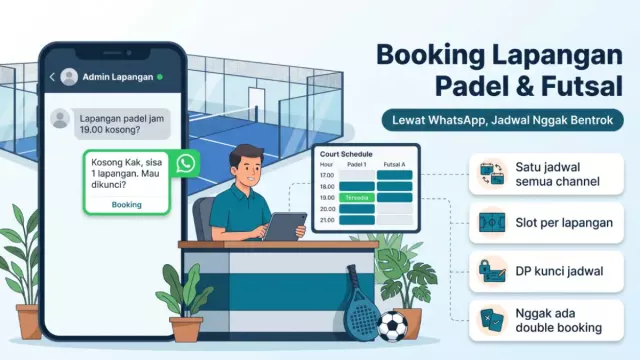
Booking is the part most worth automating. A patient who chats at 10:30 p.m. to book for tomorrow afternoon doesn't need to wait for an admin. The condition is that each doctor's schedule is in order and the AI only offers slots that are actually free.
A sample conversation:
Patient: Can I book a scaling tomorrow afternoon?
Clinic: Tomorrow is Wednesday, and Dr. Rina is in from 16:00 to 20:00. The open slots are 16:30 and 18:00. Which one works for you?
Patient: 18:00 please
Clinic: Done. Your scaling with Dr. Rina is booked for tomorrow, Wednesday, at 18:00 under your name.
For details on setting up slots per doctor and cutting down phone queues, see our article on clinic appointment booking through chat.
How cshub helps clinics answer chats after hours
cshub is used by businesses whose customers come in through chat, including clinics. Here's what matters for this case:
An AI agent built on your knowledge base. You fill in the persona, the Q&A, and PDF documents. The rule "don't give diagnoses or medicine advice" goes in the persona, and the AI's answers come from the data you entered. See the AI agent feature.
Appointments per doctor. Opening hours can be set per doctor, with several slots a day and closed days. The AI checks availability, understands "tomorrow afternoon," and turns down times outside practice hours. Details in the appointment feature.
Tiered escalation. If a chat isn't answered within the time limit you set, cshub sends a WhatsApp notification to the agent, then to the owner if it's still unanswered. Complaint chats don't get buried. See the escalation feature.
One inbox. Chats from WhatsApp, Instagram DM, Facebook Messenger, and website live chat land in one place, and you can reply from the mobile app.
We should also mention what isn't there yet: cshub doesn't have automatic appointment reminders the day before, and it isn't connected to medical records. To see how clinics use it, visit the dental clinic solution page. You can try it free at account.cshub.id.
FAQ
Should a clinic chatbot answer questions about medicine?
Better not. Questions about medicine and dosage need a judgment from a health professional who knows the patient's condition. Write this rule into the AI's instructions and prepare a handover message to staff.
What if a patient chats with an emergency in the middle of the night?
Your late-night auto-reply must point them to the nearest emergency room or to 119. A chat like this should never get just "please wait."
Can the AI quote treatment prices?
Yes, as long as the prices come from the official list you entered. For treatments whose cost depends on an exam, have the AI give a range and explain that the doctor sets the exact amount.
When should a person reply to late-night chats?
Pick one realistic deadline and state it in the auto-reply, for example within 30 minutes of the clinic opening. A clear promise reassures patients more than a fast promise you often miss.
Can X-ray or lab results be sent over WhatsApp?
That's up to your clinic's policy, but never through the bot. Personal health data is protected under Indonesia's Health Law, so make sure staff check the patient's identity before discussing any results.