When AI Should Stop Responding and Call a Human — So Customers Don't Leave
Smart AI knows when to step back and call a human admin. These are the crucial moments when handing off to customer service builds trust, not drives customers away.

cshub
16 Jun 2026 4 min read
Whenever someone suggests "use AI to respond to customer chats", the first fear that usually arises is: "What if customers get annoyed by a robot and leave?"
That fear is understandable. You've probably experienced it yourself — you chat with a store, get a response from a bot that goes in circles, the answers don't make sense, and you just want one thing: to talk to a human. If this happens to your potential buyers, it's no wonder they leave.
But here's where the problem is often misdiagnosed. What drives customers away is not the presence of AI. What drives them away is AI that .
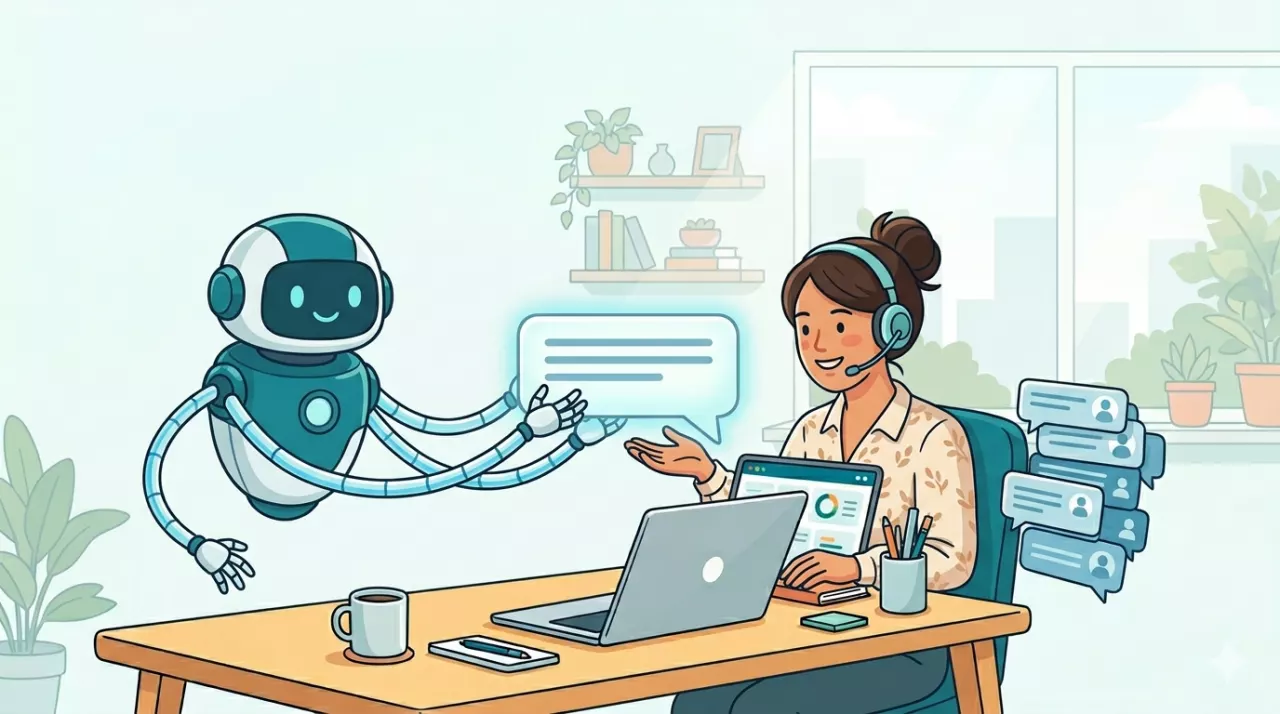
Good AI doesn't insist on answering everything. Good AI knows exactly when to step back and say, "okay, this is a job for a human." That's what we call a handoff — and a smooth handoff actually builds customer trust, not the opposite.
4 Moments When AI Must Call a Human
Not every chat needs to be handled by a human, and not everything should be handled by AI. The key is knowing the boundaries. Here are four moments when smart AI should immediately step back:
1. Customer Requests to Speak with Customer Service
This is the most obvious. As soon as a customer types "can I speak to a person?" or "is there an admin?", that's a stop signal. AI that insists on responding at this point only increases frustration. The handoff must be instant.
2. Sensitive or Emotional Complaints
Customers who are disappointed, angry, or feel wronged need empathy — and empathy is a human domain. Wrong orders, damaged goods, refunds not yet processed: situations like these can easily escalate if responded to with templates. AI should read the tone of the chat, then hand it over to an agent before things get worse.
3. Price Negotiations or Large Deals
When a customer is in "ready to negotiate" mode or discussing large orders, this is a closing moment too valuable to be fully entrusted to automation. Humans can read the room, offer flexibility, build relationships. AI should prepare the way, then hand it over to sales.
4. Questions Beyond AI's Knowledge
If there's a question that doesn't have an answer in the data you've provided to AI, don't let it make things up. An honest AI will say "I'll connect you to the team for this part" — much better than giving incorrect information that ends up causing problems.
A Proper Handoff is Seamless, Not "Hold on, I'll Transfer You" and Then Silence
Many systems claim they can handoff, but in practice, they just change "who's typing" — customers are told to wait, then silence, because the agent doesn't know the context and has to ask again from scratch. That's not a handoff, that's just passing the hot potato.
A truly effective handoff has three characteristics:
Chat context transfers. The receiving agent immediately sees the entire previous conversation — the customer doesn't have to repeat their story.
AI stops responding once the agent enters. No clash of two "voices" in one chat that confuses the customer further.
Prospect information reaches the agent in real-time. Who the customer is, what they're interested in, what stage they're at — all this is in the agent's hands before they type the first word.
The difference is significant. Customers feel they're being handed over to someone who already understands their issue, not thrown into a new queue.
How CSHub Manages These Boundaries
With CSHub's AI Agent, you decide when AI should stop — and you write it in plain language, not formulas. For example, just write: "If a customer requests to speak to a person, or is complaining, immediately transfer to an agent." AI will understand and execute.
Once the handoff is triggered, the entire conversation context plus a prospect summary enters your team's omnichannel inbox, and AI automatically stops responding to avoid overlap. For repetitive questions that don't require a human, you can also set up chatbot keywords as the first layer.
All of this is part of CSHub's Lead Intelligence approach: one intelligence managing the entire lead journey — from incoming chat to being handed over to the right person at the right moment. You can see more on the features page.
The Bottom Line
AI is not a replacement for your team. It guards the front door 24/7, filters what it can handle on its own, and calls a human at the decisive moment. Customers don't leave because they encounter AI — they leave because they feel ignored. As long as the boundaries are clear, AI actually makes them feel served faster.
Want to set up when your AI should call a human? Try CSHub free for 7 days — no credit card, 5-minute setup.