Why Leads Don't Convert: A Follow-up Guide for Online Sellers
Leads inquire and then vanish? Learn 5 reasons why leads don't convert, how to detect where they drop off, and follow-up systems to turn them into buyers.

cshub
06 Aug 2026 6 min read
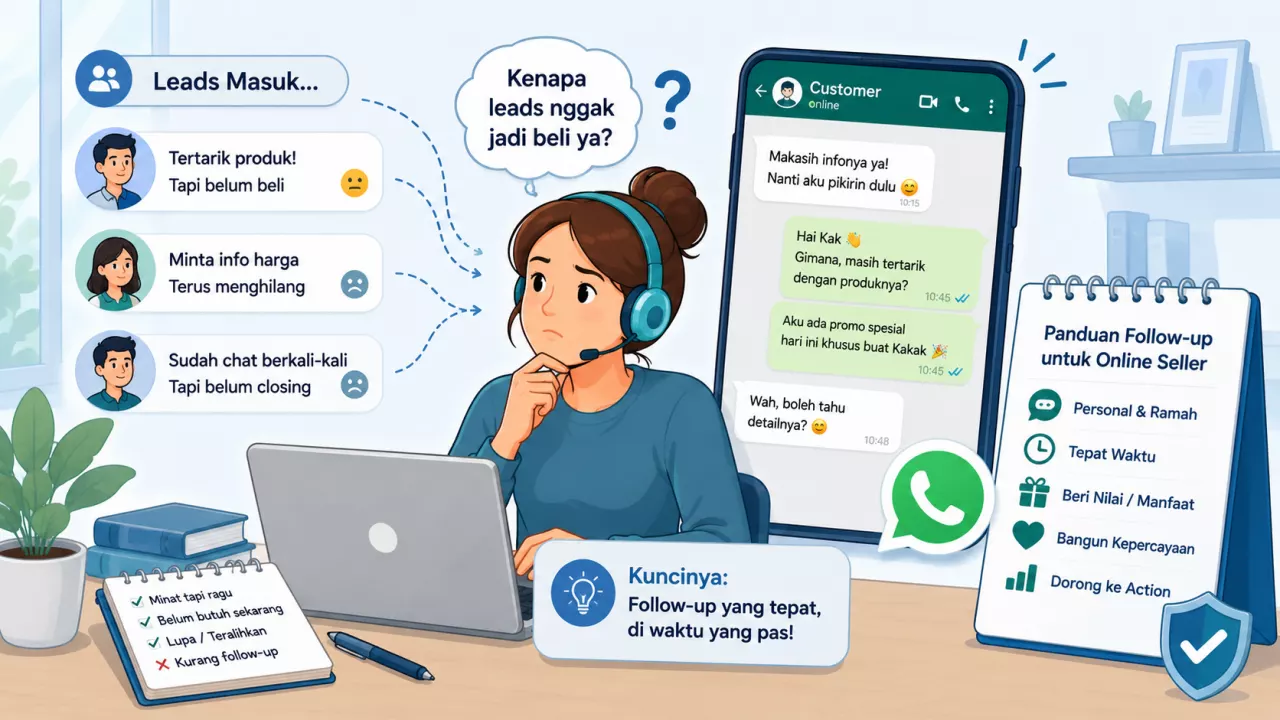
Leads that don't convert usually aren't rejecting your product—they stop at one of five identifiable points: delayed responses, unresolved questions, payment hassles, distractions leading to forgetfulness, or simply not needing the product at that time. Four of these five points can be salvaged with the right follow-up and system—only the last point is truly beyond your control.
This article maps out these five points, how to identify where most of your leads drop off, and steps to close each leak.
Why do interested leads fail to convert?
Incoming chats, inquiries, then silence—this is a common experience for almost every online seller. What often goes unnoticed: in many cases, they haven't "changed their minds." They stop at a specific point in the journey from inquiry to purchase, and without a push to continue, they remain stuck there indefinitely.
The five most common points:
1. Delayed responses
What happens: leads inquire when their buying intent is high. If the response comes hours later, that momentum is lost—they may have found another store that replied first, or their interest has shifted elsewhere.
How to detect: check your average chat response time. If it's over 1 hour during business hours, this is likely your biggest leak.
How to close it: prioritize speed over perfection—a quick, simple reply is better than a perfect one that's late. For chat volumes that can't be handled manually, an AI Sales Agent can instantly answer basic questions (stock, price, shipping) 24/7, allowing you to focus on conversations that need a personal touch. Details on how it works can be found in What is an AI Sales Agent & How It Works.
2. Unanswered questions remain
What happens: leads have specific doubts (size, material, usage, warranty) that aren't fully addressed—they go silent because they're still thinking, not rejecting.
How to detect: look at chat patterns that stop. If many stop right after a certain question, it's a signal that your standard answers lack clarity.
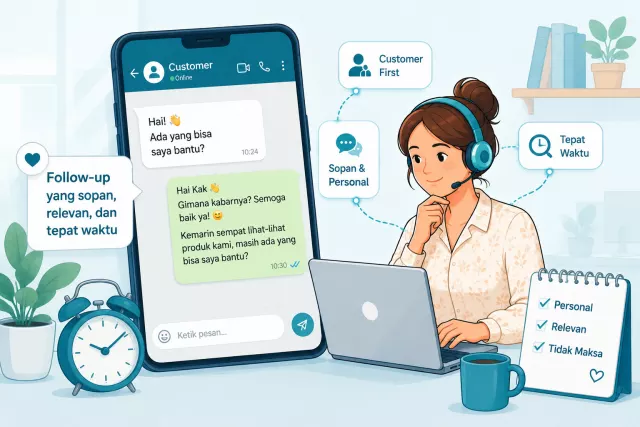
How to close it: follow up with additional information, not just asking for a decision. This is fundamentally different from pushy follow-ups—bring something new (detailed photos, variant comparisons, testimonials) with each follow-up. Complete sentence examples can be found in How to Follow-up with Customers on WhatsApp Without Being Pushy.
3. Payment process hassles
What happens: leads are ready to buy, then get stuck in the payment process—confused about how to proceed, needing manual confirmation and waiting for a reply, or the link isn't readily available.
How to detect: this is the most measurable point—check how many "selected products" but never paid. The gap between serious leads and those who pay is a direct measure of leakage at this point.
How to close it: this is known as recover cart—reaching out to leads who have reached the checkout/invoice stage but haven't paid, ideally within hours while their intent is still warm. Checkout with a payment gateway (not manual transfer + confirmation) also removes most of this friction from the start.
4. Distracted then forgotten
What happens: leads genuinely intend to buy, but their chat gets buried among other notifications, or they say "later" and forget to return.
How to detect: this is the hardest to distinguish from "not interested" without follow-up—that's why follow-up is the main way to diagnose it. If you reach out again and they respond positively, they fall into this category, not rejection.
How to close it: scheduled follow-ups with humane intervals (24 hours → 2–3 days), maximum 2–3 times. The complete timing pattern is in the follow-up article mentioned above.
5. Simply not needed at the time
What happens: this is the only point that isn't a "leak"—leads simply aren't ready, whether due to lack of funds, timing, or changing needs.
How to detect: after reasonable follow-up (2–3 times) without response or with an explicit "not needed yet" reply, this is the category.
How to close it: don't push—but don't delete either. Keep them as contacts for periodic follow-ups (weekly/monthly, with a more relaxed approach) when there's a new product or relevant promotion. Leads that "aren't needed yet" today can become buyers next month—as long as they don't disappear from your records.
How to measure where most of your leads drop off
Before fixing, measure first. The simplest way without advanced tools:
Take 20–30 lead chats from the last 2 weeks.
Group each lead into one of the 5 points above—where exactly they stopped.
Count which is the most.
The point with the highest number is your first priority to fix—fixing the wrong point (e.g., beautifying product answers when the main issue is response speed) won't increase the closing rate.
Building a system, not just the intention to follow-up diligently
Manual follow-up can work for 10-20 leads a day. Once the volume increases, relying on memory and goodwill isn't enough—a system is needed:
Pipeline/status leads—each lead has a clear status (just inquired, pending questions, checked out, paid), so none "disappear in the middle" unnoticed.
Automated follow-up at points that can be automated—payment reminders for abandoned carts and follow-ups for lost leads can be scheduled automatically, with personalized names and products.
Instant response for basic questions—AI Sales Agent covers point #1 (delayed responses) without adding to the admin's workload.
Smooth checkout—reduces leakage at point #3 from the start, before recovery is needed.
At CShub, all four are part of one flow: leads are recorded in CRM & Kanban pipeline, follow-ups run automatically based on labels and behavior (including reminders for unpaid carts), and AI Sales Agent answers basic questions 24/7, closing leakage points #1 and #2 from the first chat. (Disclosure: this article is written by the CShub team—the framework of the 5 leakage points above applies to any follow-up method you use, manual or automated.)
FAQ — Frequently Asked Questions
Why do many leads chat but don't convert? Most commonly due to one of five reasons: delayed responses, unanswered questions, payment hassles, distractions leading to forgetfulness, or simply not needing the product. The first four can be salvaged with the right follow-up and system.
How do I know where my leads drop off? Review the last 2 weeks of chats and group each lead into the five points above. The point with the highest number is the one that needs improvement first.
What is recover cart in the context of online selling? Recover cart is the effort to reach out to leads who have reached the stage of selecting products or receiving an invoice but haven't completed the payment—usually within hours, while their buying intent is still warm.
What percentage of leads is reasonable not to convert? There's no standard number as it greatly depends on the product and price, but what's more important is where they stop. Leads that stop due to delayed responses or complicated checkouts are leaks that can be closed; leads that simply aren't needed yet are normal in any business.
Should all leads be followed up? Ideally yes, at least once—because many stop not due to rejection. But respect the limits: 2–3 follow-ups with reasonable intervals, then stop if there's no response.